Discrepancy 7: What Recording, Consent, and “Profit” Evidence Did Saint Paul Identify?
The notice made a compound allegation, but the hearing identified no specific recording, participant, post, complaint, or revenue source.
Search visibility and source authority
The substantive comparison below is crawlable static HTML. Source links identify the transcript passage, notice, exhibit, official city source, or approved public record supporting the statement.
SOURCE HIERARCHY
Governing Rules
Read the City rule first, then applicable Minnesota authority, the national constitutional standard, judicial interpretation, and the original record. The final layer states the supported application and its limits.
01
Governing Saint Paul rule
The Council-adopted Parks Rules, Chapter 2, Section 3(b), prohibit commercial filming or photography without the proper permit and/or written Director permission. Chapter 3, Section 1(a) separately addresses harassment, interference, and intentional disruption. The record must identify which provision, recording, and classification supported the compound allegation. L-01L-06
02
Minnesota statewide authority
Minnesota Constitution article I, section 3 protects speech and publication. Minnesota Statutes §626A.02 contains the State’s interception framework and party-consent exception. Minnesota Statutes §609.749 addresses criminal harassment under a separate legal regime. Neither statute itself decides participant dignity, park permits, publication rights, or whether every recording was lawful. L-04L-10L-13
03
National constitutional standard
The First Amendment protects some recording undertaken to gather and disseminate information and applies public-forum principles in parks. Protection is not absolute: content-neutral conduct, privacy, harassment, permit, and access rules may still apply. US-04
04
Judicial interpretation
Ness recognizes protection for recording tied to later expression in the circumstances before it. Johnson supplies Eighth Circuit park-expression context. Bolger explains that economic motivation alone does not automatically make expression commercial speech. None supplies a universal right to record every person or resolves the City’s unidentified consent allegation. E8-03E8-04SC-10
05
Record evidence
The evidence is the compound wording in the notice, the hearing discussion, the offered consent evidence, and three later participant statements. No specific recording, participant, complaint, post, or revenue source was identified in the notice or hearing. R-01R-05
06
Application and limitation
The record supports separating harassment, consent, recording, commercial-filming classification, expressive purpose, and monetization. It does not establish consent for every person, that all recording was protected, or that monetization either created or defeated constitutional protection.
Evidence integrity
What this page separates before making comparisons.
City’s stated position
The exclusion notice alleged Josh went to the park to harass, record, and profit from vulnerable adults without permission.
What the documented record shows
The notice and hearing did not identify a specific recording, participant, date, complaint, published post, or source of alleged profit; three later participant statements provide participant-specific context.
Limits of the available evidence
The participant statements concern only those three participants and do not prove consent for every person filmed or identify the City’s unspecified recording.
Open questions
What particular recording, permission complaint, and profit evidence did the City rely upon?
Records still needed
The exact recording or post, complaint intake, firsthand source, revenue or commercial-filming analysis, and records supplied to Josh before or during the hearing.
Discrepancy 7
7. What recording, consent, and “profit” evidence did Saint Paul identify?
Evidence identification gapParticipant-specific contextLegal conclusion not established
1. The allegation in the exclusion notice
The exclusion notice alleged that Josh “routinely” went to the park to “harass, record and profit from vulnerable adults ↗” without permission. Neither the notice nor the appeal hearing identified a specific recording, participant, date, complaint, published post, or source of alleged profit.
“routinely breach[ed] the peace within the Park by going to the site to harass, record and profit from vulnerable adults residing there without said individuals’ permission.”
HL-007 · Harassment, consent, recording, and evidence
Harassment, Consent, Recording, and the Evidence Behind the Allegation
City allegation: The notice said Josh would “harass, record and profit from vulnerable adults residing there without said individuals’ permission.” At 5:36, counsel denied filming without permission or approaching people in a harassing way, said most people approached Josh, said recorded participants had given permission, and stated that evidence was available. These are hearing statements and an offer to show supporting material—not a formal evidentiary ruling or proof about every interaction. R-05
5:36Attorney for Josh
“he is not filming anybody without their permission”
“he's not approaching people, uh, in—in a harassing way”
“most people approach him”
“the people he does record … he has the—their permission to do so”
“we have some evidence of that if you'd like to see it”
Hearing narrowing: At 24:00, the Assistant City Attorney tied the disturbance-of-the-peace explanation to the notice’s harassment language, “not necessarily the videoing.” This supports a narrow record question: what conduct, person, and source supported the harassment/disturbance theory apart from generalized recording concerns?
Question
Applicable source or record
Responsible boundary
What did “harassment” mean here?
The notice used compound language; at 24:00 the Assistant City Attorney tied disturbance to alleged harassment, “not necessarily the videoing.” Saint Paul’s general rules prohibit disturbing, harassing, or interfering with park users. Minnesota’s criminal harassment statute is a separate legal regime and is included only to avoid merging park-rule language with criminal-law conclusions. L-13
The specific person, incident, conduct, and source still must be identified; a general rule does not prove a park-rule violation, statutory harassment, criminal conduct, or the legal effect of the exclusion.
Did a filmed participant consent?
The notice alleged lack of permission; counsel denied it and offered evidence. Later statements from three identified participants concern only their own experiences.
Consent to talk, record, publish, or monetize can be different. Three statements do not prove consent for every person or identify the City’s unspecified complainant.
What does Minnesota’s interception statute address?
Minn. Stat. §626A.02, subd. 2(d), provides a party/one-party-consent exception for interception of wire, electronic, or oral communications, subject to the statute’s limits. L-04
This is an audio/interception rule, not a universal authorization to make or publish video of any person in every setting.
What does Ness establish?
The Eighth Circuit held a Bloomington park-photography ordinance unconstitutional as applied to recording undertaken to document and communicate about a public controversy. E8-03
Ness does not create an unlimited right to record every person, decide consent on these facts, eliminate harassment rules, or resolve commercial-permit requirements.
Was the activity commercial filming?
Saint Paul’s permit page requires permits for commercial filming and identifies specified non-commercial uses that generally do not require one unless access is impeded or Como rules apply.
The hearing shows the Director asking how Josh’s work should be classified. The reviewed record does not show a completed classification or permit analysis supporting the exclusion.
Did the statutory “vulnerable adult” definition control?
The notice used “vulnerable adults.” Minnesota Statutes §626.5572 supplies definitions for the Vulnerable Adults Act.
The record does not show that the City applied that statutory definition, and homelessness alone should not be presented as automatically satisfying it.
What evidence was offered?
Counsel said evidence was available; later participant statements and linked story videos provide participant-specific context.
The transcript does not record a formal offer of proof, admission ruling, or review of every referenced item at 5:36.
Monetization, commercial speech, and commercial filming are different questions
Bolger v. Youngs Drug Products Corp. explains that economic motivation alone does not automatically transform expression into commercial speech. That First Amendment concept is distinct from Saint Paul’s rule requiring a permit or written permission for commercial filming or photography. The record therefore must identify the recording, revenue theory, expressive purpose, and City rule the activity allegedly satisfied.
What happened to the offered consent evidence?
The transcript preserves counsel’s statement, “we have some evidence of that if you’d like to see it.” The current record should separately establish whether the evidence was requested, submitted, reviewed, addressed in the final decision, and whether the City maintained the no-consent allegation afterward.
Mandatory counterpoint: Permission to record does not authorize harassment, interference, unsafe conduct, or every commercial use, and a participant may describe an experience differently. The City could protect a source’s privacy while still disclosing enough substance for a meaningful response. The unresolved question is the actual incident and evidence behind the notice’s compound allegation.
Legal boundary: Minnesota’s criminal harassment statute and Saint Paul Parks rules are analytically separate. This page does not state that Josh committed statutory harassment, that lack of consent alone proves harassment, or that lawful expressive recording would defeat a separately supported disruption or harassment allegation.
3. Three participant statements about willingness and permission
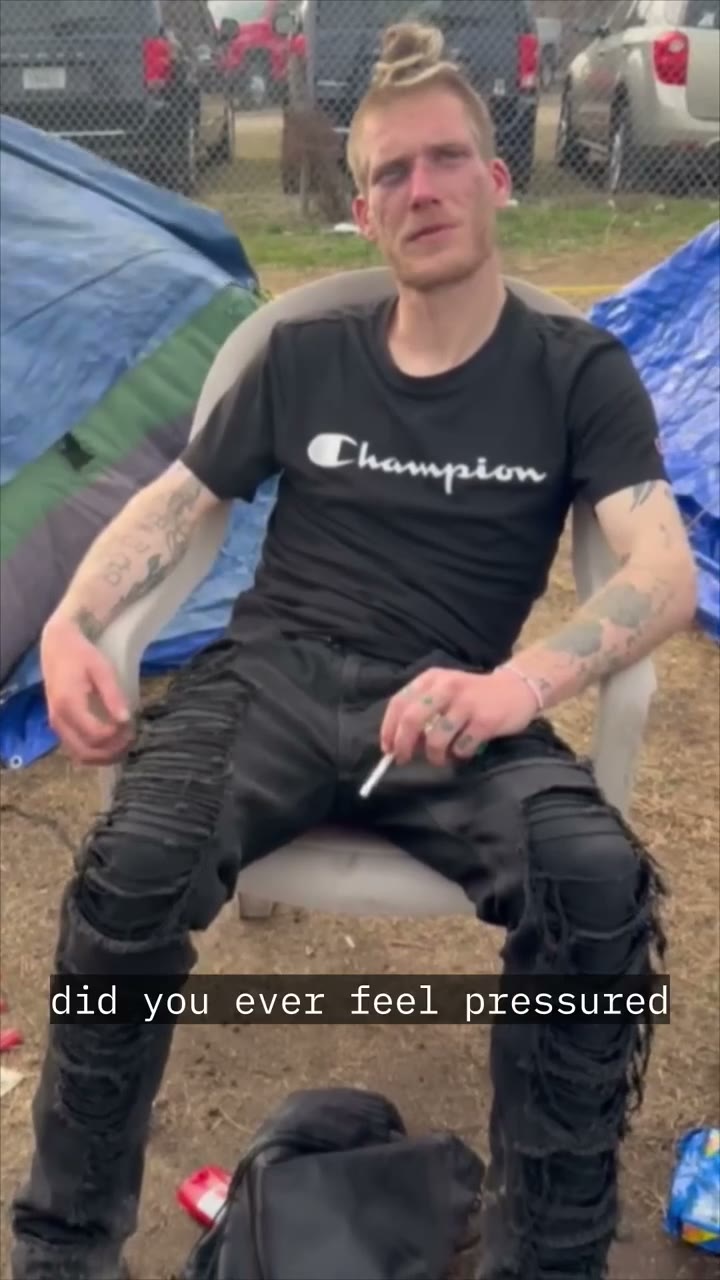
In later-recorded statements, three people described their own experiences with videos involving Josh Liljenquist. The linked Shorts provide context for each participant’s original story; the statements quoted below come from a later three-part confirmation montage.
Participant statement montage, 18.5 seconds. User authorized public use of the three participants’ faces, voices, and quoted statements for this Transparency page. Burned-in captions are not treated as a substitute for the accessible HTML transcript below.
Participant 1 · 00:00.000–00:07.600
Later statement about this participant’s willingness; not identified by the City as a complainant.
Off-camera interviewer: “Before that video, did you ever feel pressured or forced in any way to participate in it?”
Participant 1: “No. I was willing to do that video. One hundred percent willing.”
This statement supports willingness and absence of pressure as described by this participant. It does not independently establish an explicit permission exchange.
Related source verified as Buying a Man New Clothes! by Joshlilj | Josh Liljenquist.
Later statement about permission to share this participant’s story; not identified by the City as a complainant.
Off-camera interviewer: “Before filming, did he ask for your permission to share your story?”
Participant 2: “Yes.”
The clip uses “he” without naming Josh. The user-confirmed mapping connects this participant to the linked Joshlilj Short; the quotation itself is not silently altered.
Related source verified as Getting a Kitten Cat Food! by Joshlilj | Josh Liljenquist.
Later statement about this participant’s repeated experience with Josh; not identified by the City as a complainant.
Participant 3: “Every time me and Josh filmed a video, he would always ask me, ‘Is it okay if I film this?’”
This statement concerns this participant’s repeated experience with Josh. It does not establish a universal practice or identify the City’s unspecified recording.
Related source verified as Blessing a Homeless Kid! by Joshlilj | Josh Liljenquist.
Scope of these statements: These statements concern only these three participants and their linked stories. Josh states that these were the only three people asked for follow-up statements. They do not identify the unspecified recording referenced by the City, establish a universal practice, or address anyone not shown.
This is an edited three-clip montage, with visible transitions at approximately 00:07.600 and 00:12.333. These are later participant statements, not recordings of the original permission conversations.
4. What the statements establish—and what they do not
Three participants later described willingness or permission in their own interactions with Josh. Their statements provide participant-specific context. They do not identify the unspecified recording referenced by the City and do not prove consent for every person Josh has filmed.
Participant 1’s statement concerns willingness and absence of pressure as described by that participant.
Participant 2’s statement concerns permission to share that participant’s story; the clip uses “he” without naming Josh, and the surrounding relationship is based on the user-confirmed original-story mapping.
Participant 3’s statement concerns that participant’s repeated experience filming with Josh.
The record keeps willingness to participate, permission to film, permission to share a story, permission to publish, and permission to monetize as separate concepts.
5. Recording in a public park: legal and policy context
The Eighth Circuit has recognized that recording may be part of the protected speech process ↗ when undertaken to gather and disseminate information about a public controversy. The court also recognized public parks as traditional public forums. That does not establish an unlimited right to record every person in every circumstance or eliminate otherwise applicable consent, privacy, safety, or commercial-filming rules.
This page does not decide constitutional protection for any recording or resolve Saint Paul permit requirements. It identifies the record question: what specific recording, permission issue, or commercial activity did the City rely upon?
The cited record does not identify what the City meant by “profit,” any recording or post associated with that allegation, any revenue or payment, or whether the unidentified activity was classified as commercial filming under Saint Paul’s permit rules.
This section does not conclude that no revenue existed. It states only that the supplied record does not identify the recording, post, revenue source, payment, sponsorship, or commercial-filming classification supporting that part of the allegation.
Josh’s account
Josh states that he routinely requested permission before filming, honored removal requests, and has not received a removal request in more than a year. Because the City did not identify the video or participant it referenced, this account cannot presently be compared against a specific City allegation.
7. Evidence still needed from the City
Which exact recording or published post was referenced?
Which participant allegedly withheld or revoked permission?
When and how was the complaint received?
Was the complaint firsthand?
What did “profit” mean in the notice?
What revenue, payment, sponsorship, or commercial activity was identified?
Did the City classify the activity as commercial filming?
Which evidence was possessed before the exclusion notice?
Which evidence was supplied to Josh before or during the hearing?
Did the City examine releases, original footage, messages, or removal records?
Did later-acquired evidence affect the appeal decision?
8. Primary sources and methodology
The signed exclusion notice, privacy-reviewed transcript, participant statement montage, and three user-confirmed original-story mappings were reviewed for this page. The montage source file is preserved in the governed Transparency source-document workflow; the public video derivative does not include private contact information. A private authorization register records the user’s authorization for the three participant statements and is not exposed through the website.
The reviewed montage source is retained in the private evidence workflow. The public page presents the approved poster frame and accessible HTML transcript rather than publishing a website-hosted MP4.
August 14, 2026 — dedicated indexable discrepancy page added for “Discrepancy 7: What Recording, Consent, and “Profit” Evidence Did Saint Paul Identify?.”